The Hidden Predictors of Crystallization Success: Function and Folding
In drug discovery, obtaining high-quality protein for structural studies such as X-ray crystallography is often the first and one of the most critical challenges. Proteins must not only be expressed and purified to above 90% purity, but also remain functional and properly folded. The latter is sometimes a challenge when you need to use a combination of “far jumps” and “exploring locally” during construct design. At ZoBio, we've learned that one of the most effective ways to maximize the chances of producing crystallizable protein is to let function and fold guide construct selection. Rather than focusing solely on protein expression or purity, we ask a more important question early on: does the protein behave as it should?
Recently, we explored a wide panel of constructs designed to tackle crystallization of a notoriously challenging protein for which no crystal structure had previously been reported. Our objective was to maintain functional protein folding while improving yield and stability. This required close collaboration between our protein scientists and biophysicists, combining experimental throughput with careful interpretation.
We started with a standard construct evaluation, assessing protein expression and solubility following one-step affinity purification in a plate-based format (Figure 1A). We then assessed the folded state of all constructs by analyzing their thermal unfolding profiles using nanoDSF (Figure 1B). Furthermore, we confirmed that the protein constructs retained binding to a known small molecule inhibitor by measuring their thermal stabilization upon ligand binding (Figure 1C). Positive thermal shifts were strong indicators of correct folding, allowing us to ensure that the orthosteric site remained intact and functional.
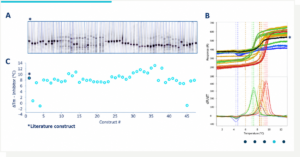
Figure 1. Screening and characterization of X-ray crystallography constructs.
A) Purity and yield of expressed proteins were assessed by SDS-PAGE following one-step affinity purification in a plate-based format. B) Representative thermal unfolding profiles of the literature construct and newly designed constructs measured by nanoDSF. C) Thermal stabilization induced by binding of a known inhibitor. The asterisk (*) denotes the original literature construct.
To further de-risk the path to structure determination, we introduced early 1D 1H NMR screening based on the demonstration that the quality of the 1H NMR spectrum can be a good predictor of X-ray crystallography success [1]. We ranked constructs shortlisted by nanoDSF based on their 1D 1H NMR spectral dispersion and peak quality, reflecting the degree of structural dynamics, structural homogeneity, and suitability for crystallization. This allowed us to rapidly distinguish between well-folded and poorly behaved constructs (Figure 2A). Within a month, we moved from a broad construct set to a focused shortlist of four constructs with a high likelihood of structural success, one of which ultimately yielded crystals (Figure 2B).
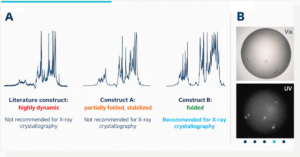
Figure 2. Representative 1D 1H NMR spectra illustrating protein folding quality and crystallization suitability.
A) The initial literature construct exhibited poor spectral dispersion and characteristics indicative of a highly dynamic protein not suitable for X-ray crystallography. In contrast, newly designed constructs achieved high NMR grades, consistent with properly folded proteins and a higher likelihood of crystallization success. B) Crystals obtained from one of the constructs assigned a high NMR grade.
Our takeaway:
When function and folding are built into the selection process from the start, structural success becomes far more predictable. By focusing on the right proteins early on, you give your crystallography campaign the best possible chance of success.
 Contact Our Panta Expert